The Process

From Fibre
to Rider.

We start with the yarn. The finished garment is where the work is put to the test.

Explore the four stages
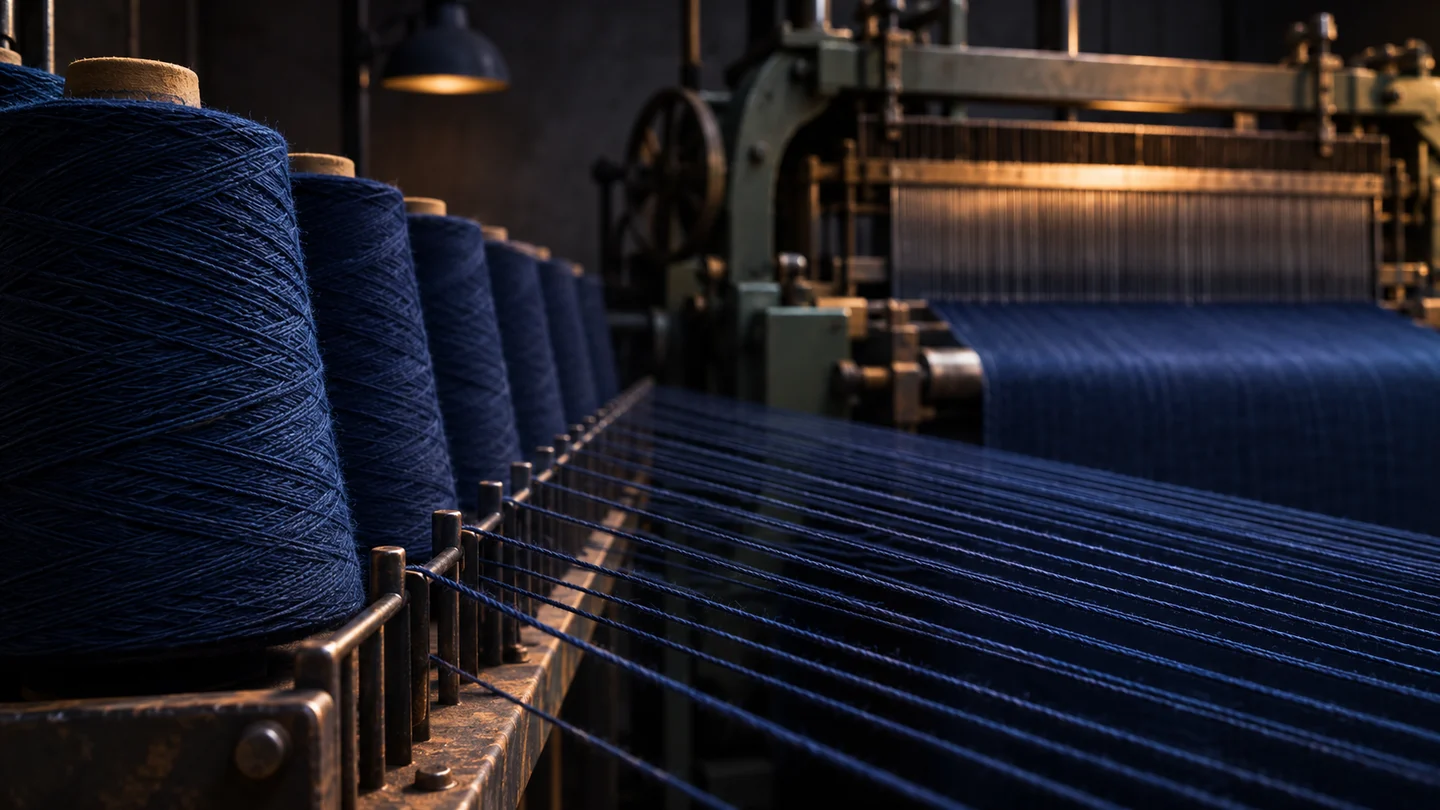
Illustration of dark indigo yarn cones feeding threads towards a loom
Illustration of textile production

Four stages

Built from the yarn up.

01

Core-spun yarn

Strength at the core. Softness at the surface.

During core spinning, a high-performance filament runs through the centre of the yarn while softer staple fibres are drafted and twisted around it. The core contributes strength, and the outer fibres form the surface you feel.

We develop the yarn around both jobs. The core needs to stay covered, the yarn needs to be even enough for weaving, and the outer fibres need to give the fabric a familiar, comfortable touch.

02

Single-layer fabric

Abrasion resistance built into the cloth.

We weave the yarn into a fabric that balances abrasion resistance with movement. Yarn placement, weave and density affect how the cloth wears, bends and drapes. On single-layer styles, the outer cloth does the job of an abrasion liner, reducing the amount of fabric needed.

We develop the finish alongside the weave to achieve a softer hand feel. Fabric trials are where we compare touch, flexibility and resistance to abrasion and tearing before moving into garment development. These checks help us choose the cloth; Class AAA is assessed on the garment design.

03

Garment construction

Everyday style, cut for a riding position.

We cut the cloth into panels and stitch them into a clean silhouette. A riding pattern has to work with bent knees and elbows, a seated posture and the reach to the bars. Those positions inform the cut and where we place the seams.

We design structural seams, closures and protector pockets as part of the garment. The pockets position impact protectors over their intended areas while keeping the look understated. Fabric, stitching, closures and protector placement all matter when the garment is assessed.

04

Class AAA testing

The finished design is assessed as a whole.

EN 17092-1:2020 describes the assessment methods, and EN 17092-2:2020 sets the Class AAA requirements. The programme examines the materials and structural details used in the garment, along with how the garment fits and functions.

Impact abrasion
Relevant material assemblies are assessed against the requirements for the garment zones in which they’re used.
Tear and seam strength
The assessment checks resistance to tearing and whether structural seams and closures withstand the required loads.
Fit, movement and protector placement
The garment is assessed for essential movement and whether the applicable protectors cover their intended areas. The protectors have their own impact rating under the relevant EN 1621 standard.

Look for Class AAA on the label of the specific garment. A cloth test alone doesn’t establish the garment’s class, and the garment class doesn’t tell you the level of each protector.

Read our guide to EN 17092 testing

The Technology

See what the work delivers.

Explore single-layer construction, fabric feel, garment ratings and impact armor.

Explore The Technology
The Process | MOTO APPAREL